
Agricultural Soil Characteristics Across Yemen’s Governorates and Best Practices for Soil Improvement
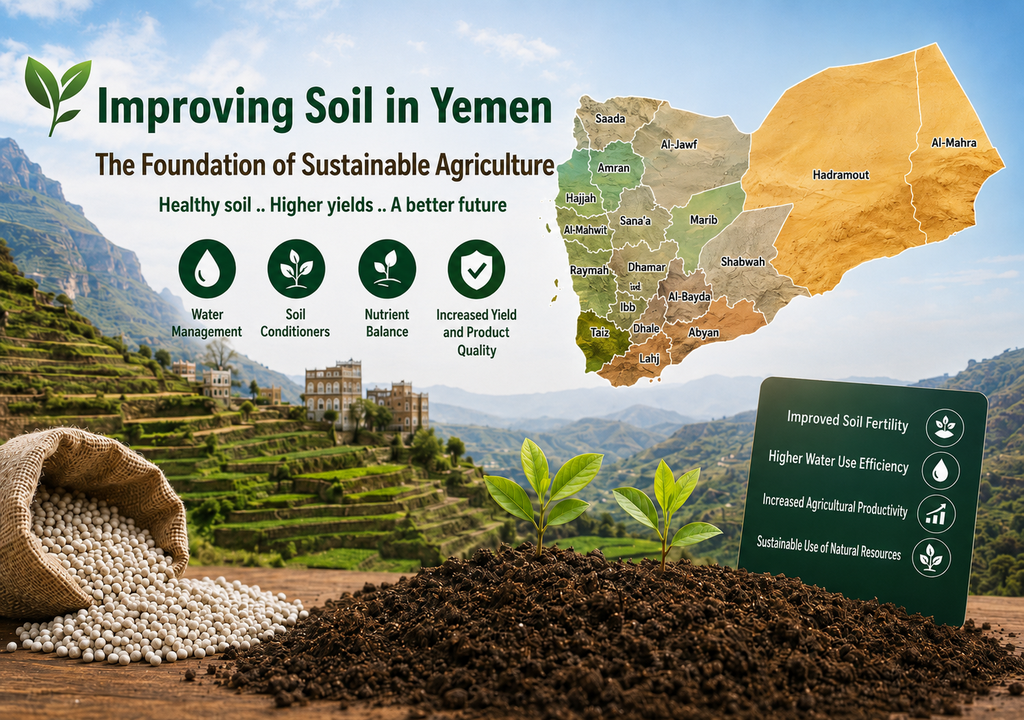
Agricultural Soil Characteristics Across Yemen’s Governorates and Best Practices for Soil Improvement The Republic of Yemen is distinguished by its unique geographical and climatic diversity, which has a direct impact on the characteristics of agricultural soils across different regions. Understanding soil properties in each area is essential for selecting appropriate fertilization programs and achieving maximum crop productivity. 1. Soils of the Central Mountain Highlands Major Areas Sana’a Dhamar Ibb Raymah Al Mahwit Amran Large parts of Taiz These regions represent some of Yemen’s most important agricultural zones, characterized by their famous terraced farming systems, a unique agricultural heritage. Soil Characteristics Clay to clay-loam soils. Relatively rich in minerals derived from volcanic rocks. Good moisture-retention capacity. Susceptible to erosion on sloping lands. Often low in organic matter due to long-term cultivation. Major Crops Wheat and barley Yemeni coffee Potatoes Various vegetables Temperate fruits such as apples, peaches, and pomegranates Qat Agricultural Requirements Increasing organic matter content. Balanced application of nitrogen, phosphorus, potassium, and micronutrients according to crop needs. Use of soil conditioners to enhance biological activity and nutrient uptake. 2. Soils of the Southern and Southwestern Highlands Major Areas Parts of Taiz Highland areas of Lahj Al Dhale’e Parts of Abyan Soil Characteristics Moderately deep soils. Medium organic matter content. Vulnerable to erosion caused by seasonal rainfall. Fertility varies between valleys and upland areas. Major Crops Maize Sorghum Coffee Vegetables and fruits Qat Key Challenges Nutrient losses through rainfall runoff. Need for balanced fertilization programs. 3. Soils of the Western Coastal Plains (Tihama Plain) Major Areas Al Hudaydah Parts of Hajjah Parts of Al Mahwit Coastal areas of Taiz The Tihama Plain is one of Yemen’s largest and most productive agricultural regions. Soil Characteristics Young alluvial soils formed over thousands of years. Soil textures range from sandy to silty and clayey. Generally fertile in many locations. High temperatures throughout much of the year. Risk of salinity accumulation in certain areas. Major Crops Cotton Maize Sesame Onion Tomato Mango Papaya Watermelon Melon Okra Agricultural Requirements Improved irrigation management. Salinity mitigation practices. Use of advanced fertilizers and soil conditioners to increase water-use efficiency. 4. Soils of Agricultural Valleys Major Areas Wadi Hadramout Wadi Bana Wadi Tuban Wadi Zabid Wadi Mawr Wadi Sirdud Soil Characteristics Among the most fertile agricultural lands in Yemen. Rich in clay and silt deposits. Good aeration and drainage. Suitable for a wide range of crops. Major Crops Date palms Cereals Vegetables Forage crops Tropical fruits Qat Key Challenges Nutrient depletion due to intensive cultivation. Need for specialized nutrient management programs based on regular soil analysis. 5. Soils of the Eastern and Desert Regions Major Areas Hadramout Al Mahra Shabwah Al Jawf Parts of Marib Soil Characteristics Sandy to sandy-loam soils. Low organic matter content. High water permeability. Limited moisture-retention capacity. Major Crops Date palms Alfalfa Irrigated vegetables Fruit trees Agricultural Requirements Regular addition of organic matter. Use of soil conditioners that improve water retention. Split fertilizer applications to reduce nutrient losses. 6. Soils of Marib Governorate Marib has become one of Yemen’s fastest-growing agricultural regions in recent years. Soil Characteristics A mixture of sandy and silty soils. Suitable for modern agricultural systems. Requires careful irrigation and fertilization management. Major Crops Citrus fruits Pomegranates Vegetables Forage crops Improvement Requirements Increasing soil organic matter. Enhancing water-use efficiency. Improving the availability of micronutrients. 7. Soils of Saada Governorate Saada is well known for its favorable agricultural environment, particularly for fruit production and cash crops. Soil Characteristics Relatively deep mountain soils. Rich in certain natural minerals. Good moisture-retention capacity. Major Crops Pomegranates Grapes Almonds Cereals Qat Key Challenges Soil erosion. Maintaining the fertility of agricultural terraces. How Modern Agricultural Solutions Improve Different Soil Types Given the significant variation in soil characteristics across Yemen, relying on a single fertilization program for all regions is no longer effective. Modern agriculture therefore focuses on: Conducting soil analysis before fertilization. Selecting specialized fertilizers according to soil type and crop requirements. Applying soil conditioners suited to local environmental conditions. Implementing balanced nutrition programs for both macro- and micronutrients. Improving irrigation efficiency and water management practices. These approaches contribute to higher yields, improved crop quality, and greater agricultural sustainability across Yemen’s diverse farming environments. Conclusion Yemen possesses a remarkable diversity of agricultural soils, ranging from fertile volcanic soils in the highlands to alluvial soils in valleys and coastal plains, as well as sandy soils in desert regions. Understanding the characteristics of each soil type and adopting suitable agricultural solutions are the foundations of successful farming, enabling growers to maximize productivity while preserving natural resources for future generations.